Description
Diversified portfolio of 7 leading carbon removal suppliers through Stripe Climate’s Frontier program. Delivery expected in 2027.

Carbon removal via Frontier Portfolio. Delivery: 2027.
How much carbon do you want to remove?
Diversified portfolio of 7 leading carbon removal suppliers through Stripe Climate’s Frontier program. Delivery expected in 2027.
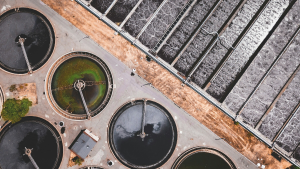
The Approach Plants naturally draw down CO2 from the atmosphere via photosynthesis. Much of that ends up as carbon-rich waste in the form of biosolids, manure, food or agricultural waste…
152,480 t contracted · Delivery 2024-2027 · $58.3M committed
Permanence Permanent geologic storage — the injected biomass is isolated from the atmosphere indefinitely in deep disposal wells.
How it works. Plants draw down CO2 via photosynthesis; Vaulted converts the resulting carbon-rich organic waste (biosolids, manure, food waste) into a slurry and injects it into deep geologic wells for permanent storage.
Measurement & verification. Removal is calculated as biomass carbon weight minus process emissions (transport and energy). Verification partners enforce a feedstock-sourcing protocol reviewed against Frontier's sourcing principles.
The Approach Hafslund Celsio will retrofit its waste incineration facility with a carbon capture unit. The facility currently processes approximately 350,000 tons of waste each year. The incineration process generates…
99,998 t contracted · Delivery 2029-2030 · $31.7M committed
Permanence Permanent geologic storage — the captured CO2 is transported and stored in geological formations under the North Sea.
How it works. Hafslund Celsio retrofits its Oslo waste-to-energy incineration facility (which processes ~350,000 tons of waste a year) with a carbon-capture unit, capturing the CO2 from combustion.
Measurement & verification. The contract price accounts for measuring, reporting and verifying that each captured ton is safely and permanently stored.
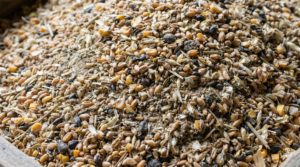
The Approach NuLife collects biowaste — materials like oat hulls, grease-trap waste, canola sludge, and biosolids — that would otherwise decompose and release its carbon back to the atmosphere. In…
122,000 t contracted · Delivery 2026-2030 · $44.2M committed
Permanence Long-term geologic storage — bio-oil is injected into licensed salt caverns more than 1,000 m underground.
How it works. NuLife uses hydrothermal liquefaction to convert biowaste (oat hulls, grease-trap waste, canola sludge, biosolids) into a stable bio-oil, which is injected underground for storage.
Measurement & verification. Deliveries are independently verified by Isometric; pricing includes measuring, reporting and verifying that each ton is safely and permanently stored.
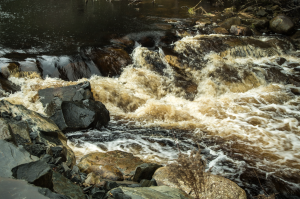
The Approach River liming is a longstanding practice of adding crushed up limestone to acidified rivers in order to raise pH. It successfully treated the acid rain problem in Scandinavia…
55,442 t contracted · Delivery 2025-2029 · $25.4M committed
Permanence Permanent — river-formed bicarbonate reaches the ocean and remains in stable form, not temporary sequestration.
How it works. CarbonRun adds crushed limestone to rivers to raise pH; the limestone combines with CO2 to produce bicarbonate, a stable form of carbon that flows to the open ocean for permanent storage.
Measurement & verification. Direct measurement: water chemistry is sampled upstream and downstream of a treatment point, quantifying CO2 removal without complex models. Co-benefit: restores salmon and shellfish in acidified rivers.
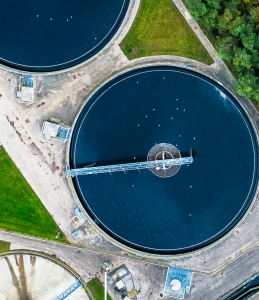
The Approach Wastewater treatment plants use microbes grown in treatment tanks, known as secondary treatment, to break down the organic waste entrained in the wastewater, which naturally produces biogenic CO2.…
71,877 t contracted · Delivery 2025-2030 · $32.2M committed
Permanence Permanent — bicarbonate resists reconversion to gaseous CO2 and is stored for thousands of years in oceans, rivers, or the subsurface.
How it works. CREW adds crushed limestone to wastewater-treatment tanks, where it reacts with the biogenic CO2 produced during treatment (up to 10,000+ ppm) to form bicarbonate carried to the ocean.
Measurement & verification. Mineral dissolution is measured in-situ before treated water is discharged, tracking CO2 capture at the plant inlet and outlet within plant boundaries.
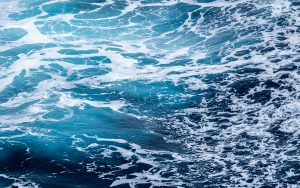
The Approach Planetary enhances the ocean's natural carbon sink by adding dissolved alkaline minerals to coastal surface waters. The added alkalinity converts dissolved CO2 into stable bicarbonate ions, a form…
115,211 t contracted · Delivery 2026-2030 · $31.3M committed
Permanence Durable for over 10,000 years — bicarbonate is held by the ocean's natural chemical buffering system.
How it works. Planetary adds dissolved alkaline minerals to coastal waters (using existing outfalls), boosting the ocean's ability to convert dissolved CO2 into stable bicarbonate ions.
Measurement & verification. Minerals are dissolved before release to remove dissolution-timing uncertainty; sensors plus validated models measure the alkalinity effect, with FAIR data sharing and a safety 'stop trigger'. Co-benefit: improves conditions for shellfish.
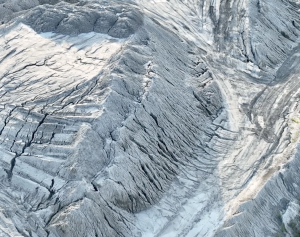
The Approach Lithos accelerates the natural ability of rocks to absorb CO2 by spreading superfine crushed basalt on farmlands and measuring the removal empirically. They source the finely ground basalt…
154,240 t contracted · Delivery 2024-2028 · $57.1M committed
Permanence Permanent — CO2 is stored as ocean bicarbonate, compressing a centuries-long natural process into 3-4 years.
How it works. Lithos spreads ultrafine waste basalt on farmland; the basalt reacts with rainwater and locks up atmospheric CO2 as bicarbonate, which flows to the ocean for permanent storage.
Measurement & verification. A proprietary method measures rock dissolution over time in soil samples using mass spectrometry, enabling frequent, lower-cost sampling than hardware-intensive alternatives.

The Approach Terradot sources basalt from quarries across southern Brazil, transports it to nearby farms where it is spread on farmland to absorb CO2, and measures how much CO2 has…
89,998 t contracted · Delivery 2025-2029 · $27.0M committed
Permanence Permanent — atmospheric CO2 is converted to ocean bicarbonate, preventing re-release.
How it works. Terradot spreads waste basalt on agricultural soils to accelerate rock weathering; the basalt reacts with rainwater, converting CO2 into bicarbonate stored permanently in the ocean.
Measurement & verification. Dual verification: before/after soil sampling to quantify captured CO2, plus watershed water-chemistry monitoring at farm outlets to track basalt dissolution at scale.

The Approach Phlair's closed loop system works by contacting air with a high-pH liquid to capture CO2. Once the capture liquid becomes saturated with CO2, it is mixed with a…
47,001 t contracted · Delivery 2027-2030 · $30.6M committed
Permanence Permanent — captured CO2 is injected underground for durable geologic storage; the closed-loop fluids regenerate without degradation.
How it works. Phlair's direct air capture contacts air with a high-pH liquid to capture CO2, then mixes it with a low-pH liquid to release concentrated CO2 gas, cycling continuously via hydrogen-looping electrolysis.
Measurement & verification. The contract price accounts for measuring, reporting and verifying that each ton is safely and permanently stored; the system targets under 1.5 MWh of energy per ton removed.

Create a free account in 30 seconds. Use CarbonGuru everywhere — in your browser, inbox, apps, and AI agents — and see your impact immediately.