Kuamut Rainforest Conservation

Improved Forest Management Avoided Emissions Malaysia

Project Description

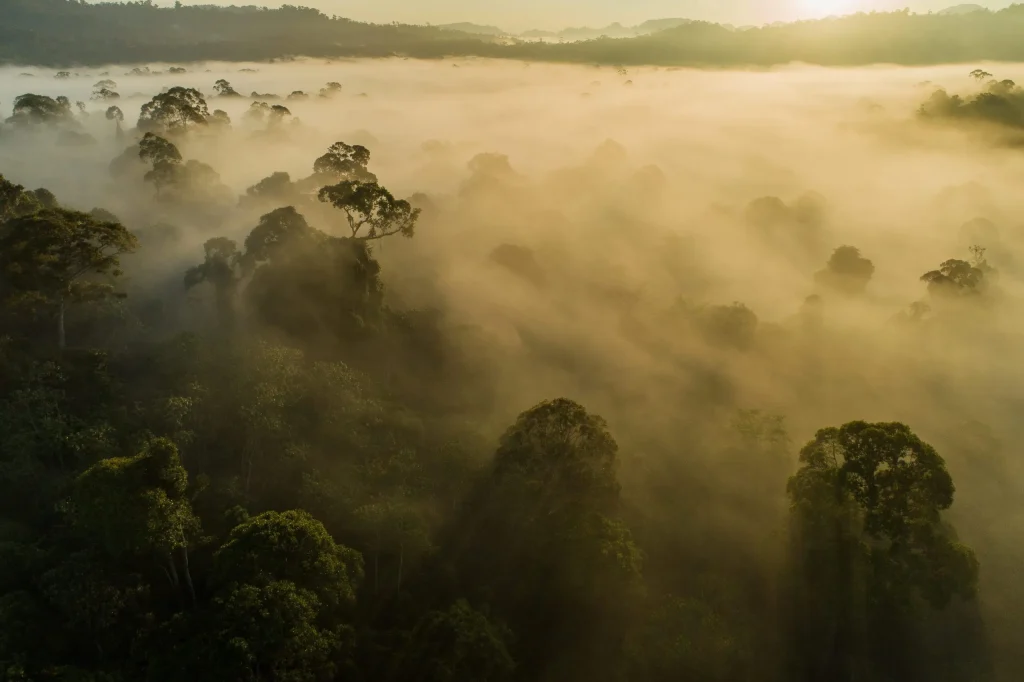
This project is protecting over 83,000 hectares of biodiverse tropical forests from intensive logging. The project area is creating jobs, supporting the regrowth of logged forests and fostering biodiversity. The project area is known to support populations of elephants, banteng, orangutan, and endangered bird species including the Helmeted Hornbill, Bornean Peacock Pheasant and Stormโ€™s Stork.

Key Information

Developer Permian Malaysia
Project Type Improved Forest Management
Impact Type Avoided Emissions
Methodology VM0010
Verifier Earthood
Project Lifetime 2015 – 2045

Due Diligence

CNaught maintains a very high quality standard for all projects in the portfolios we manage. To ensure that a project meets this standard, we perform due diligence thatโ€™s backed up by third-party ratings agenciesโ€™ independent due diligence. 

 
Additionality:
This project has high additionality, meaning it is very unlikely that this project activity could have occurred in the absence of carbon funding. Prior to the project, the Kuamut Forest Reserve was subject to intensive commercial logging under a 99-year concession held by Yayasan Sabah Group, leading to severe forest degradation. The carbon project facilitated the reclassification of the protected area from a Class 2 forest (permitting timber extraction) to a Class 1 forest (prohibiting extraction), effectively ending profitable harvesting activities that would have otherwise continued. Because forest protection generates no commercial revenue the project requires external carbon funding to compete with Malaysia’s active timber industry. While Sabah state has committed to protecting 30% of its forests by 2030, the developer provided confidential funding agreements that confirm that protecting this specific area was contingent on carbon project development, rather than existing policy trends.

โ€
Over-Crediting:
This project has a low risk of over-crediting, meaning that it is likely to have accurately accounted for the amount of carbon emissions being avoided and removed from the atmosphere. The project pioneered the use of advanced remote sensing technology – including aerial LiDAR, machine learning algorithms, and high-resolution satellite imagery combined with traditional field plot measurements – resulting in significantly more accurate  carbon quantification than most forest projects while accelerating adoption of these technologies across the industry. Our remote sensing analysis confirmed that its carbon claims are accurate and that there was no detectable activity-shifting outside of the project area. Despite this, the project still took a 28% leakage deduction to be conservative, further lowering its risk of over-crediting. The project received ‘A’ ratings from both BeZero and Sylvera, in large part due to its exceptional carbon accounting, making this project one of the highest-rated improved forest management projects in the world.

โ€
Durability:
This project activity is highly durable as we are confident in its ability to provide permanent emissions reductions and removals. The project benefits from permanent legal protection through its upgrade to Class I fully protected forest status (preventing any future logging). Fire risk is minimal with no significant fire activity recorded since 2001 and no projected increase in fire danger through 2100. Flood and storm risks are also low due to the project’s geographic characteristics. While Sylvera does note that the project location has a moderate risk of periodic drought, we find that risk to be minimal as the project area contains a diverse forest which has been shown to be very resilient to both temporary and prolonged drought periods1.

โ€
Double-Counting:
The project credits have a very low risk of being double counted. There are no regulatory obligations being met by the project activity and the projectโ€™s registry, Verra, has mechanisms in place to ensure that the project is not registered in any other programs. We also confirmed that the project does not overlap with any other forest carbon projects to ensure that its credits are not claimed by other projects.
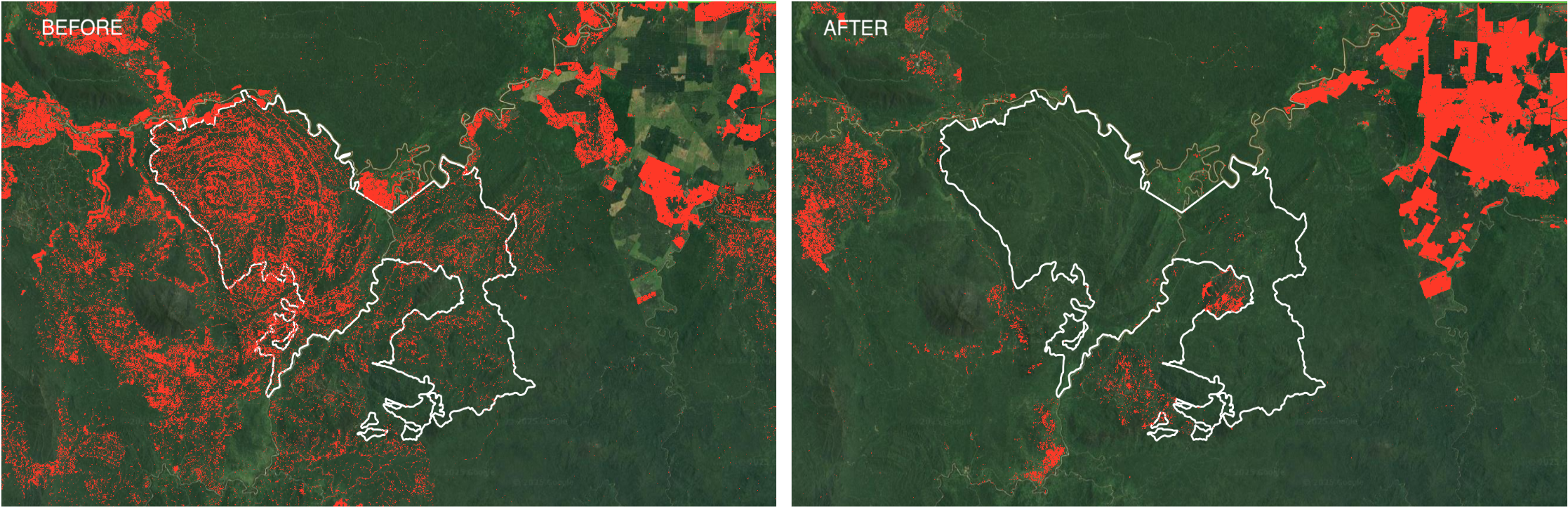
Due Diligence Diagram

The before image shows extensive deforestation (in red) within and around the project area (outlined in white) prior to implementation, while the after image reveals successful forest protection within the project boundary, despite continued deforestation pressure in surrounding areas. These figures demonstrate both the project's additionality, as evidenced by the clear history of intensive deforestation within the project area, and the efficacy of the improved forest management program, as deforestation rates have plummeted within the project boundary while remaining high in surrounding areas.

Beyond Carbon

Community and biodiversity co-benefits

This project delivers substantial community and environmental benefits. 

Community: The project provides employment for 32 local residents with inclusive hiring of women, and is investing in infrastructure improvements like clean water systems for 245 people, sanitation facilities, and solar panels. Kuamut also provides monthly revenue sharing payments of ~$24 to 450 households. The project has also conducted extensive community outreach through 11 workshops, reaching over 488 participants and is expanding community services like boat ambulance services and additional clean water systems.

Environment: Kuamut provides exceptional biodiversity benefits by protecting 83,381 hectares of dipterocarp forest. This forest connects two world-renowned protected areas (Maliau and Danum Valley) and harbors 907 identified species, with 9.2% classified as threatened including iconic species like Bornean elephants, proboscis monkeys, and helmeted hornbills. The project uses advanced monitoring techniques including LiDAR, hyperspectral observation, and camera trapping to track ecosystem health and species populations.

Risk of Reversal

Nature-based projects like this one face some risk of reversal. Carbon storage may be affected by natural hazards such as wildfires, flooding, and escalating climate change impacts. Additionally, human-driven factors such as changes in land use or local governance structures can also impact carbon storage.

Registry & Verification

Registry Verra
Project ID 2609
Verification Body Earthood

Notable Buyers

Organizations that have purchased credits from this project

In the News

The fall of the forest-based carbon offset: A cautionary tale for Malaysia

The Star ยท Jun 28, 2024

CNaught’s take: This article argues that forest-based carbon credits in general are problematic and specifically calls it out as a warning for Malaysia as carbon projects are beginning to grow there. The article is correct that there have been integrity issues with many carbon projects and there have been methodological issues with older forest-based carbon credits that have led to widespread over-crediting. However, it also mistakenly claims that all forest-based credits are no longer considered credible by voluntary standards such as the ISO and VCMI, when these and other credible standards instead advocate for the use of avoided-deforestation credits only from high-integrity projects. Kuamut has been rigorously reviewed by multiple ratings agencies and other experts (including ourselves!) and has consistently been found to be of exceptional quality.

Bursa Malaysia Debuts Malaysiau2019s First Nature-Based Carbon Credits

CarbonCredits.com ยท Jul 30, 2024

CNaught’s take: Bursa Malaysia's Carbon Exchange successfully auctioned Malaysia's first domestically produced carbon credits from the Kuamut Rainforest Conservation Project, with the auction clearing at RM50 per contract and attracting organizations committed to reducing their environmental impact. The Kuamut project has achieved impressive credentials, including verified carbon units under Verra's VCS standard that cut annual emissions by nearly 800,000 tCO2e, Gold Level status under CCB Standards, and recognition from Sylvera and BeZero as one of the most advanced forest management projects. This milestone demonstrates strong market confidence in Kuamut's quality and integrity, positioning it as a premium Malaysian carbon credit that buyers can trust to deliver real climate benefits while supporting forest conservation and community development.

Malaysian state updates forest law to regulate carbon trading

Quantum Commodity Intelligence ยท Apr 17, 2025

CNaught’s take: Sabah's new forestry law amendment requires mandatory licensing for all forest carbon activities, ensuring that projects are properly registered and regulated while protecting Indigenous community rights. This regulatory framework reduces risks that projects will harm local communities by requiring state approval and maintaining community protections, which helps ensure that projects last and deliver benefits to both climate and people. The law positions Sabah to maintain direct control over carbon revenue and creates a more controlled environment for high-quality projects like Kuamut to operate with greater credibility and sustainability.

Can communities truly benefit from carbon credit projects?

Fair Planet ยท Jun 20, 2023

CNaught’s take: This article highlights the critical importance of meaningful community engagement in carbon credit projects with Permian Global's Community Specialist sharing success stories of how proper involvement can transform lives, such as turning illegal wildlife poachers into biodiversity officers. The emphasis on deep community understanding and long-term commitment to local needs demonstrates that Permian Global, Kuamut's project developer, takes a responsible approach that prioritizes Indigenous rights and sustainable community development alongside carbon outcomes. This community-first philosophy also ensures that Kuamut is designed for long-term success, as projects with genuine local support and benefits are more likely to deliver lasting climate impact while avoiding the pitfalls that have plagued other forest carbon initiatives.

UN Sustainable Development Goals

This project contributes to the following UN Sustainable Development Goals

UN Sustainable Development Goal 4: Quality Education

Goal 4: Quality Education

Ensure inclusive and equitable quality education and promote lifelong learning opportunities for all.

Learn more about UN SDG 4
UN Sustainable Development Goal 8: Decent Work and Economic Growth

Goal 8: Decent Work and Economic Growth

Promote sustained, inclusive and sustainable economic growth, full and productive employment and decent work for all.

Learn more about UN SDG 8
UN Sustainable Development Goal 15: Life on Land

Goal 15: Life on Land

Protect, restore and promote sustainable use of terrestrial ecosystems, sustainably manage forests, combat desertification, and halt and reverse land degradation and halt biodiversity loss.

Learn more about UN SDG 15

Project Location

Malaysia

Coordinates: 5.20000, 117.33000

View on Google Maps

Project data sourced from CNaught carbon marketplace. Information may be updated periodically.