
Karnataka Regenerative Farming
Project Description
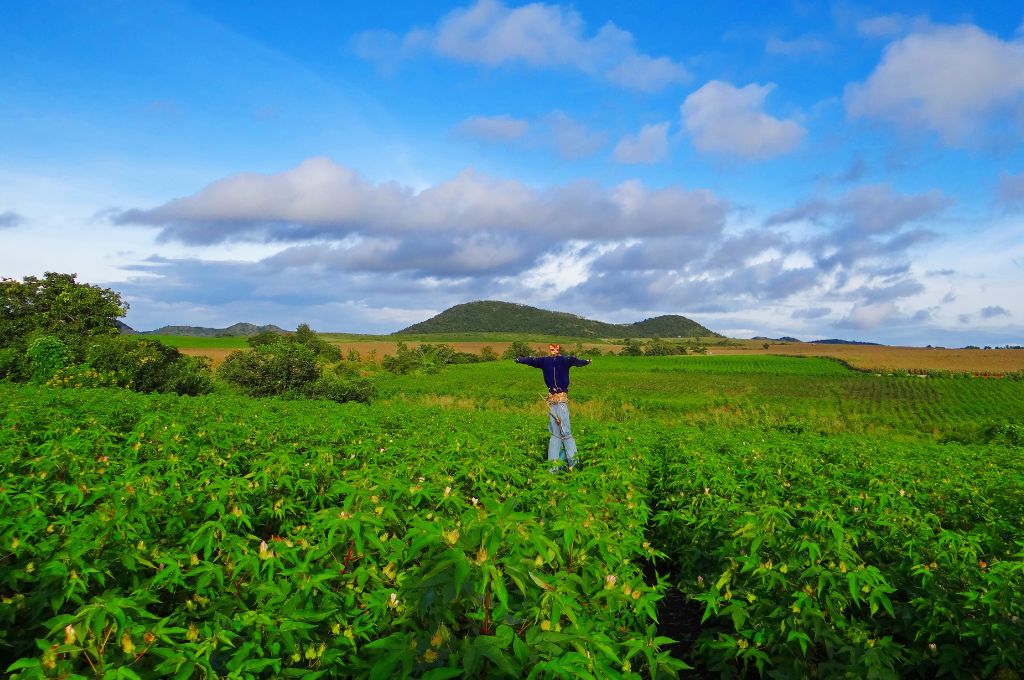
This project works with smallholder farmers across Karnataka, India, providing them with financial incentives, capacity building, and technical support to help them transition away from chemical fertilizers toward sustainable, organic farming practices. By introducing approaches such as agro-forestry, mulching, green manure, and vermicomposting, the project actively removes carbon from the atmosphere and stores it in the soil, while also reducing greenhouse gas emissions associated with conventional farming. Importantly, the project goes beyond carbon outcomes: farmers have reported increased crop yields and higher market value for organic produce, contributing to improved incomes and livelihoods. Taken together, this initiative represents a holistic approach to sustainable agriculture that connects meaningful climate impact with long-term community and ecosystem well-being across rural Karnataka.
Key Information
Developer
Vedic Green Solutions; Kanaka Management Services
Project Type
Agricultural Land Management
Impact Type
Mix of Removals and Avoidance / Reduction
Methodology
VM0017 Adoption of Sustainable Agricultural Land Management
Verifier
EPIC
Project Lifetime
2017 – 2042
Oxford Category
Oxford Type 4—Nature-based Removals
Due Diligence
CNaught maintains a very high quality standard for all projects in the portfolios we manage. To ensure that a project meets this standard, we perform due diligence that’s backed up by third-party ratings agencies’ independent due diligence.
Additionality:
This project has high additionality, meaning it is very unlikely that this project activity could have occurred in the absence of carbon funding. While Karnataka has seen some growth in organic and regenerative agriculture, adoption remains marginal — certified organic farmland stood at around 93,963 hectares by 2016, compared to over 12 million hectares managed under conventional agriculture in the state. The project’s participating farmers face significant barriers to adoption, including high upfront implementation costs and the need for specialized technical knowledge, challenges that are particularly acute given that 78% of participating farmers are subsistence farmers primarily dependent on agriculture for food security and livelihood. While Karnataka’s Organic Farming Policy provides some institutional support, it is limited in scope and funding, and has not been sufficient to drive large-scale adoption of these practices across the state. Carbon finance is therefore critical to making the project viable, enabling the developer to provide the training, inputs, and technical assistance necessary to bring nearly 30,000 farmers into the program.
Over-Crediting:
This project has a low risk of over-crediting, meaning that it is likely to have accurately accounted for the amount of carbon being reduced and removed from the atmosphere. The project uses the well-established RothC soil carbon model to estimate changes in soil organic carbon over time, and has gone beyond what the methodology requires by conducting two rigorous soil sampling campaigns — collecting 397 samples at baseline and an additional 730 samples during the first monitoring period — to calibrate and validate the model. Validation results showed deviations within 15%, confirming the model performs reliably across the project landscape, and the project’s reported sequestration rate of 3.05 tCO₂e per hectare per year falls within our benchmark range of 0.86 to 3.25 tCO₂e per hectare per year based on peer-reviewed literature. The project further stratifies its 57,516 hectares into 16 distinct biophysical zones based on IPCC climate regions and soil types to ensure carbon estimates account for variability across the project area, and applies conservative uncertainty deductions where estimates exceed acceptable thresholds. While the project does not sample soil across every individual field due to the operational complexity of repeatedly sampling tens of thousands of fields, this is only likely to introduce a small over-crediting risk that is balanced by a conservative crediting deduction that the project takes to offset this risk. Leakage risk is minimal, as all project activities take place within existing cropland boundaries with no displacement of agricultural production or land conversion expected elsewhere.
Durability:
This project activity is highly durable with low risk of reversal over the project’s lifetime. Natural hazards including fire, flooding, drought, and extreme winds pose minimal risk to the project area, with historical data confirming only low-intensity fire events and negligible flood exposure across the project landscape. The project’s own regenerative agriculture activities actively reduce these risks by improving soil structure and water retention, making soils more resilient to erosion, drought, and flooding. The highly dispersed nature of the project across 57,516 hectares across multiple agro-climatic zones in Karnataka further limits the likelihood that any single natural event could affect a meaningful portion of the project area. On the anthropogenic side, carbon rights are clearly defined and all participating land parcels are privately owned by farmers with documented land titles. Farmers are bound by long-term legally binding agreements that require sustainable land management practices to be maintained for 40 years, extending 10 years beyond the project’s 30-year crediting period, significantly reducing the risk of early farmer withdrawal. The project’s continuous training, input support, and revenue-sharing arrangement create strong and sustained economic incentives for farmers to remain engaged throughout the project’s lifetime. The project also allocates 10% of generated carbon credits to a buffer pool to account for any unforeseen carbon stock losses, providing an additional layer of protection.
Double-Counting:
The project credits have a very low risk of being double counted. There are no regulatory obligations being met by the project activity and the project’s registry, Verra, has mechanisms in place to ensure that the project is not registered in any other programs. We confirmed that there are no other regenerative agriculture or similar nature-based carbon projects that overlap with any of the project areas.
Beyond Carbon
Community and biodiversity co-benefits
This project delivers significant community and environmental benefits.
Community: This project supports nearly 30,000 smallholder farmers across 57,516 hectares of cropland in Karnataka, helping them transition from conventional to organic farming through ongoing training, technical support, and capacity building. By lowering input costs, improving crop yields, and providing access to premium markets for organic produce, the project directly improves farmer incomes and livelihoods. Over time, healthier soils lead to greater agricultural productivity, improving both crop quality and quantity, and contributing to long-term food security for farming communities. A benefit-sharing agreement ensures that farmers receive 50% carbon credit revenues, creating an additional and reliable income stream. The project has been designed with strong community engagement at its core, with all participating farmers consulted through farmer associations, and a participatory approach that allows farmers to provide ongoing input into how the project is run.
Environment: By replacing synthetic fertilizers with organic inputs such as manure and vermicompost, the project significantly improves soil health and nutrient cycling across the project area. Cover crops and crop residue retention further enhance soil structure, reduce erosion, and improve water infiltration and retention. The shift away from chemical fertilizers and agrochemicals also reduces agricultural pollution and minimizes contamination of local groundwater and water systems. The project’s agroforestry component, which involves planting native and naturalized tree species across the project area, enhances above-ground biodiversity and contributes to improved microbial diversity in the soil. Together, these practices help reverse land degradation, support ecosystem restoration, and build the resilience of farming landscapes to increasingly extreme and erratic weather patterns.
Risk of Reversal
Nature-based projects like this one face some risk of reversal. Carbon storage may be affected by natural hazards such as wildfires, flooding, and escalating climate change impacts. Additionally, human-driven factors such as changes in land use or local governance structures can also impact carbon storage.
Registry & Verification
Notable Buyers
Organizations that have purchased credits from this project
UN Sustainable Development Goals
This project contributes to the following UN Sustainable Development Goals

Goal 13: Climate Action
Take urgent action to combat climate change and its impacts.
Learn more about UN SDG 13
Goal 15: Life on Land
Protect, restore and promote sustainable use of terrestrial ecosystems, sustainably manage forests, combat desertification, and halt and reverse land degradation and halt biodiversity loss.
Learn more about UN SDG 15Project Location
Project data sourced from CNaught carbon marketplace. Information may be updated periodically.