CNaught maintains a very high quality standard for all projects in the portfolios we manage. To ensure that a project meets this standard, we perform due diligence that’s backed up by third-party ratings agencies’ independent due diligence.
Additionality:
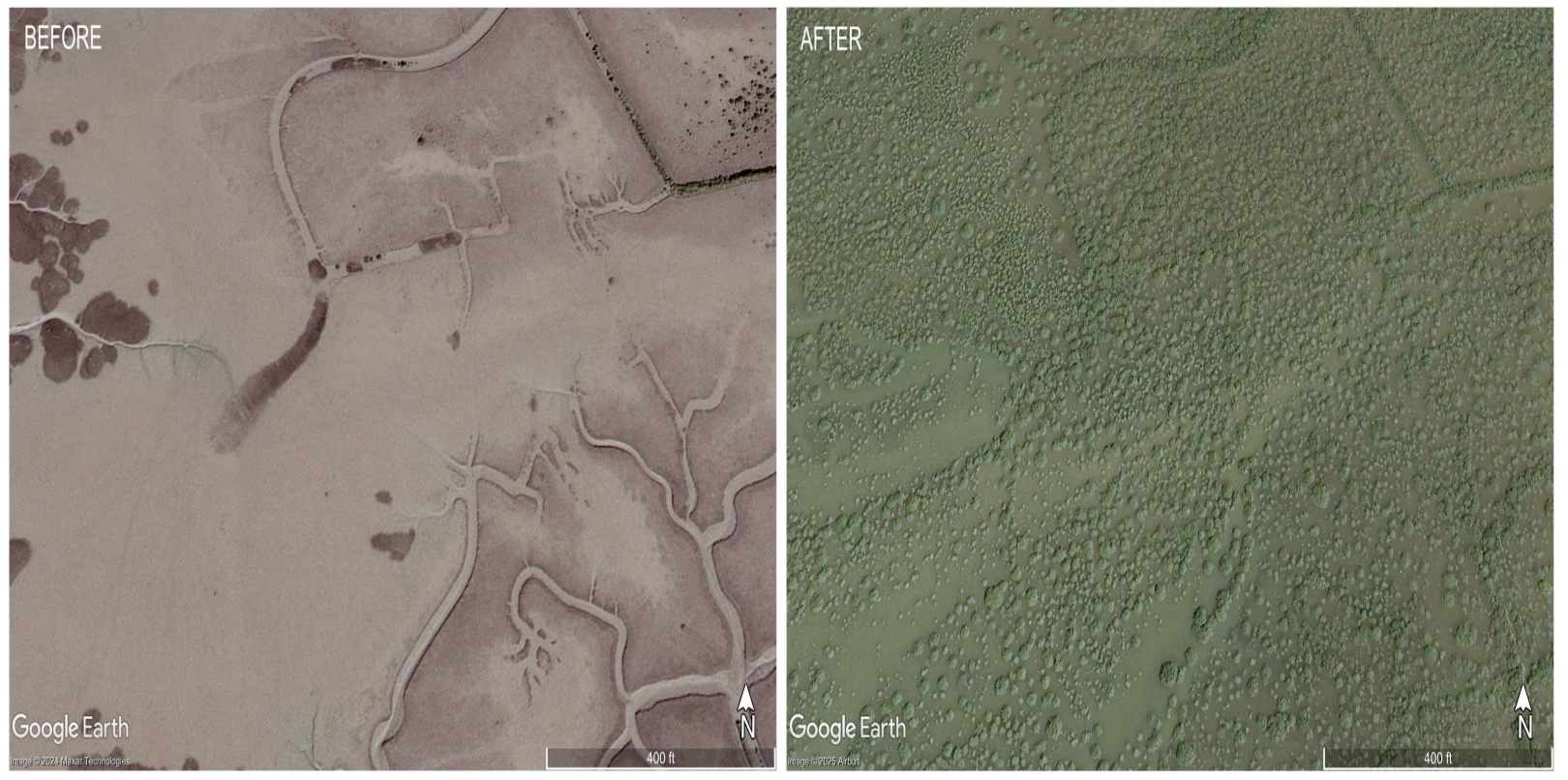
This project has high additionality, meaning it is very unlikely that this project activity could have occurred in the absence of carbon funding. Prior to the project, the area’s original mangrove forests were cleared and drained to create grazing land for local livestock, which most likely would have continued without intervention. Mangrove restoration requires substantial upfront capital investment and generates minimal direct revenue, making it financially unfeasible without carbon funding. While Pakistan’s government has committed to mangrove restoration through its One Billion Trees initiative, the program lacks sufficient funding to achieve restoration at the scale Delta Blue has implemented1. This assessment of additionality has been independently verified by all four carbon rating agencies, each confirming the project’s strong additionality credentials.
Over-Crediting:
This project has a low risk of over-crediting, meaning that it is likely to have accurately accounted for the amount of carbon being removed from the atmosphere. We found that the project was conservative in their baseline estimation, which all four ratings agencies agree with. Generally, it is challenging to quantify removals from mangroves using satellite imagery, as the majority of those removals occur underground. However, we found that the project has a rigorous approach to sampling carbon throughout the project area and are confident that the amount of carbon being sequestered by the mangroves and soil is being accurately estimated. This project is highly-rated by two rating agencies, but received a BB from BeZero and Sylvera. Both relied on remote sensing to quantify the forest carbon stocks for this project. However, mangroves are very different from typical forests in how they sequester carbon and how they appear in remotely sensed data. We found that their approach underestimated carbon stocks in mangroves, leading to a lower score than the other agencies, which relied on a more suitable approach using a mangrove-specific remote sensing methodology paired with the project’s own field measurements.
Durability:
This project activity is highly durable, as its carbon removals will remain long after the project’s crediting period ends in 2075. The Sindh Forest Act was recently amended to make mangrove forests legally protected, which should prevent the Delta Blue mangroves from being deforested in the future2. It is also unlikely that the mangroves would be illegally deforested, as the project was designed in close collaboration with local communities, which increases the likelihood that the local community will protect the forest for decades to come3. Additionally, the project has planted a diverse array of native mangrove species, which should reduce the mangroves’ susceptibility to natural risks such as fire, disease, or insects4. While flooding is always a risk in coastal areas, mangroves are naturally resistant and are unlikely to be damaged by flooding. In fact, the newly restored mangroves should help protect not just themselves from storms and flooding, but also local communities and infrastructure5.
Double-Counting:
The project credits have a very low risk of being double counted. There are no regulatory obligations being met by the project activity and the project’s registry, Verra, has mechanisms in place to ensure that the project is not registered in any other programs.