CNaught maintains a very high quality standard for all projects in the portfolios we manage. To ensure that a project meets this standard, we perform due diligence that’s backed up by third-party ratings agencies’ independent due diligence.
Additionality:
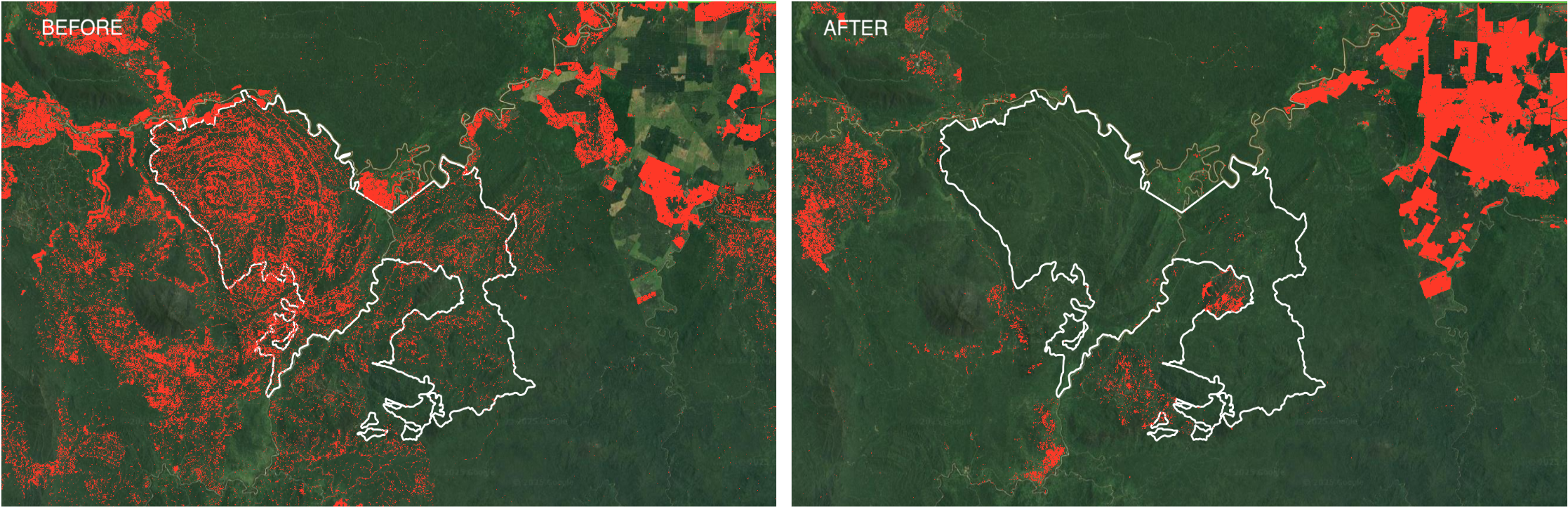
This project has high additionality, meaning it is very unlikely that this project activity could have occurred in the absence of carbon funding. Prior to the project, the Kuamut Forest Reserve was subject to intensive commercial logging under a 99-year concession held by Yayasan Sabah Group, leading to severe forest degradation. The carbon project facilitated the reclassification of the protected area from a Class 2 forest (permitting timber extraction) to a Class 1 forest (prohibiting extraction), effectively ending profitable harvesting activities that would have otherwise continued. Because forest protection generates no commercial revenue the project requires external carbon funding to compete with Malaysia’s active timber industry. While Sabah state has committed to protecting 30% of its forests by 2030, the developer provided confidential funding agreements that confirm that protecting this specific area was contingent on carbon project development, rather than existing policy trends.
Over-Crediting:
This project has a low risk of over-crediting, meaning that it is likely to have accurately accounted for the amount of carbon emissions being avoided and removed from the atmosphere. The project pioneered the use of advanced remote sensing technology – including aerial LiDAR, machine learning algorithms, and high-resolution satellite imagery combined with traditional field plot measurements – resulting in significantly more accurate carbon quantification than most forest projects while accelerating adoption of these technologies across the industry. Our remote sensing analysis confirmed that its carbon claims are accurate and that there was no detectable activity-shifting outside of the project area. Despite this, the project still took a 28% leakage deduction to be conservative, further lowering its risk of over-crediting. The project received ‘A’ ratings from both BeZero and Sylvera, in large part due to its exceptional carbon accounting, making this project one of the highest-rated improved forest management projects in the world.
Durability:
This project activity is highly durable as we are confident in its ability to provide permanent emissions reductions and removals. The project benefits from permanent legal protection through its upgrade to Class I fully protected forest status (preventing any future logging). Fire risk is minimal with no significant fire activity recorded since 2001 and no projected increase in fire danger through 2100. Flood and storm risks are also low due to the project’s geographic characteristics. While Sylvera does note that the project location has a moderate risk of periodic drought, we find that risk to be minimal as the project area contains a diverse forest which has been shown to be very resilient to both temporary and prolonged drought periods1. This project is rated ‘A’ by both BeZero and Sylvera but received a ‘B’ from Calyx Global, largely because Calyx holds that nature-based projects need at least a 100-year crediting period to support durability claims, a bar most nature-based projects (including this one) do not meet since it is not feasible to do so. We agree with BeZero and Sylvera that the project’s permanent protected area status, secured through its partnership with the Malaysian government, is more than sufficient to ensure its long-term durability.
Double-Counting:
The project credits have a very low risk of being double counted. There are no regulatory obligations being met by the project activity and the project’s registry, Verra, has mechanisms in place to ensure that the project is not registered in any other programs. We also confirmed that the project does not overlap with any other forest carbon projects to ensure that its credits are not claimed by other projects.