Goal 3: Good Health and Well-being
Ensure healthy lives and promote well-being for all at all ages.
Learn more about UN SDG 3
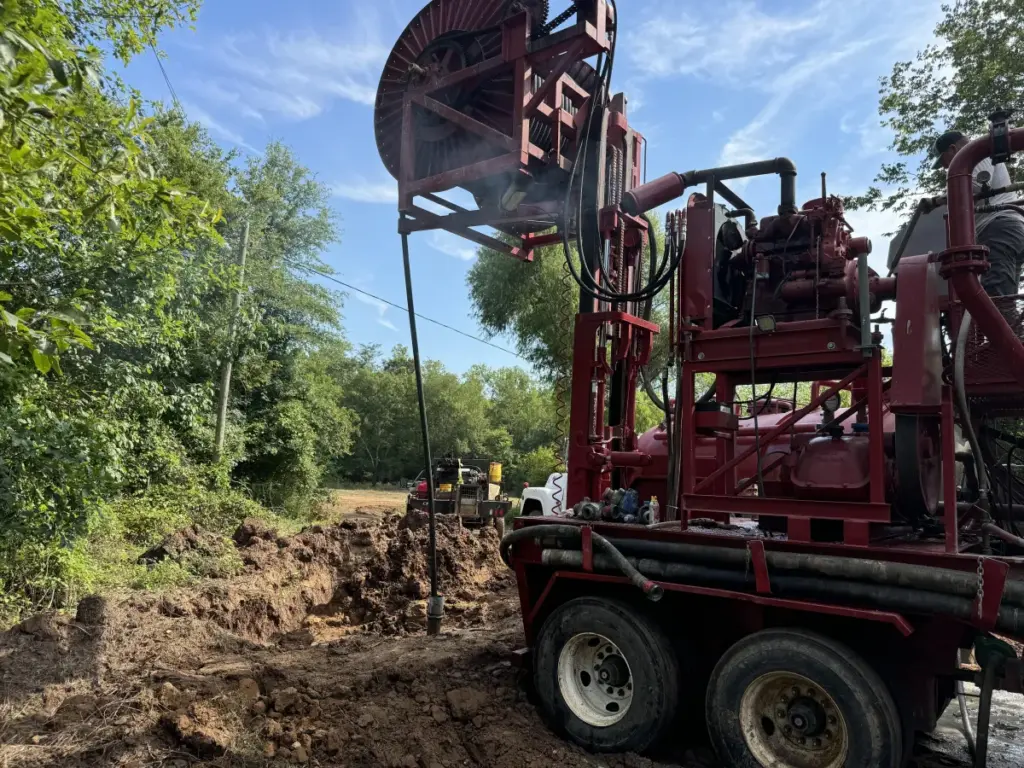
This project plugs four orphaned oil wells located in Caddo Parish, Louisiana. The wells were emitting methane upon discovery, had no designated operator, and there was no regulatory requirement or other legal requirement for plugging them. Louisiana lacks the financial resources to properly address this problem, and there are no Louisiana laws or regulations that require the plugging of orphaned wells, making carbon finance the sole revenue stream enabling their closure. The plugging of the wells was overseen by state-approved contractors, and state regulators assigned field agents to monitor the plugging of the orphaned wells. The project provides permanent methane abatement as well as land restoration and native habitat recovery. By permanently sealing these wells, the project also improved local air quality and contributed to reducing global greenhouse gas emissions.
CNaught maintains a very high quality standard for all projects in the portfolios we manage. To ensure that a project meets this standard, we perform due diligence that’s backed up by third-party ratings agencies’ own due diligence.
Additionality:
This project is highly additional, meaning it is unlikely that this project activity could have occurred in the absence of carbon funding. Carbon finance is the sole revenue stream for the proponent, who relies on it to cover both capital and operational expenses, with no alternative financial incentives to conduct plugging activities outside of government contracts. Louisiana’s Oilfield Site Restoration fund is capped at USD 14 million in annual collections against an estimated USD 542.9 million needed to address the state’s documented orphaned wells, and at historical plugging rates it would take over 30 years to clear the existing list. Furthermore, the policy environment has become increasingly unfavorable following the January 2025 executive order rescinding key federal guidance and freezing Bipartisan Infrastructure Law allocations, significantly reducing the likelihood of state-led plugging within the crediting period. However, two of the project wells are located near residential areas, which could have elevated their priority on the state’s plugging list, and both were formally designated as orphaned only recently, introducing a modest degree of additionality risk. We find this risk to be limited given the chronic underfunding of state plugging programs, and BeZero agrees citing the trend of newly documented orphaned wells consistently outpacing the number plugged each year, and the deteriorating federal policy environment, all of which make state intervention within the 20-year crediting period unlikely for the majority of project wells.
Over-Crediting:
This project has a low risk of over-crediting. While the project applies a static baseline leakage rate over the 20-year crediting period, this assumption is supported by literature demonstrating that orphaned wells can leak for decades before exhausting their reservoirs, and the proponent’s practice of surveying hundreds of wells to identify high emitters lends credibility to the measured rates. The omission of cement and material footprints from project emissions is negligible, constituting an estimated 0.6% of issued credits, and the application of a GWP value of 28 rather than the current IPCC value of 29.8 results in a conservative underestimation of potential credit issuance by approximately 6%, further reducing over-crediting risk. Leakage risks are minimal given the orphaned and inactive status of all project wells, with no meaningful risk of activity displacement or market leakage. While some uncertainty remains regarding whether the two wells drilled in 1954 and 1956 would have continued leaking at the recorded rate for the full crediting period, we find this risk to be limited given the broad evidence that orphaned wells sustain emissions over long timeframes and the conservative nature of several other accounting parameters. This project is rated highly by two other agencies but received a BB from Sylvera, driven in part by the omission of cement and material footprints addressed above and in part by concern that plugging these wells could increase methane emissions at nearby wells in the same reservoir. State inspection reports show the other unplugged wells in that reservoir are not currently leaking methane, which limits our concern about this risk as well.
Durability:
This project activity is highly durable as its emissions reductions are considered permanent, since the methane leaks from orphaned wells are permanently eliminated once the wells are properly plugged with cement. The project’s durability risks are limited due to top-tier plugging practices, supportive regulation, ongoing methane monitoring, economically unviable reservoir re-drilling, and low potential for well communication. Wells are plugged by cementing the wellbore, completely sealing hydrocarbon bearing zones to permanently eliminate all future production and emissions. Plugging with cement creates an impermeable seal that can withstand high pressure and temperature, ensuring that no fluids can escape from the well.
Double-Counting:
The project credits have a very low risk of being double counted. There are no regulatory obligations being met by the project activity and the project’s registry, ACR, has mechanisms in place to ensure that the project is not registered in any other programs.
Louisiana has over 6,000 known orphaned wells, yet no state laws require their plugging. The problem may be even bigger than this as there are over 21,000 inactive wells which are classified as high risk for becoming orphaned. This figure from the Environmental Defense Fund highlights the scale of the problem. With costs ranging from $20,000 to over $1 million per well and no revenue generation, the state has only plugged fewer than 600 wells to date. Recently, the federal funding that the state relied on to plug those wells has been eliminated. The state does not have sufficient funds to plug all of these heavy emitting wells which is where the carbon market can come in. By supporting projects like this one, you help close the gap between plugged and unplugged wells.
Community and biodiversity co-benefits
This project delivers meaningful beyond carbon benefits that create lasting positive impacts for the local community and environment in Caddo Parish, Louisiana. By permanently plugging wells that were in close proximity to people’s homes, nearby families are now safer from injuries and no longer have to worry about toxic air, water, and soil contamination. Beyond methane abatement, plugging these high-emitting wells reduces ground-level ozone pollution, protects water supplies from contamination, and reduces the risk of explosion and fires in populated areas. The project also significantly reduces the release of toxic chemicals like benzene and arsenic that are prevalent in older oil wells, carrying tremendous environmental benefit for the surrounding ecosystem. Many of these orphaned wells are located in rural, economically disadvantaged communities that have suffered from years of divestment, and plugging them can create good-paying jobs and spur economic revitalization for the region.
The project also provides important environmental restoration co-benefits through the removal of aging industrial infrastructure and rehabilitation of degraded land. This is particularly significant for two of the project’s wells located in low-lying, flood-prone areas where submerged wellhead casings posed a serious risk of damage to groundwater and surrounding wetlands. Through remediation and revegetation efforts — including the reintroduction of native plant life like Switchgrass (Panicum virgatum) — the project stabilizes soil, reduces erosion, promotes biodiversity, and creates a safer and healthier habitat for local wildlife, contributing to a more resilient and productive landscape across Caddo Parish.
There is low risk of reversal should the material used to plug the well malfunction.
Organizations that have purchased credits from this project
This project contributes to the following UN Sustainable Development Goals
Ensure healthy lives and promote well-being for all at all ages.
Learn more about UN SDG 3
Build resilient infrastructure, promote inclusive and sustainable industrialization and foster innovation.
Learn more about UN SDG 9
Ensure sustainable consumption and production patterns.
Learn more about UN SDG 12
Take urgent action to combat climate change and its impacts.
Learn more about UN SDG 13
Protect, restore and promote sustainable use of terrestrial ecosystems, sustainably manage forests, combat desertification, and halt and reverse land degradation and halt biodiversity loss.
Learn more about UN SDG 15Project data sourced from CNaught carbon marketplace. Information may be updated periodically.
Create a free account in 30 seconds. Use CarbonGuru everywhere — in your browser, inbox, apps, and AI agents — and see your impact immediately.