Bottomland Forests of the Louisiana Plains

Improved Forest Management Mix of Removals and Avoidance / Reduction Louisiana, United States

Project Description

The NativState – Bottomland Forests of the Louisiana Plains (PDA) is a programmatic development approach (PDA) to aggregated Improved Forest Management. PDA aggregates forestlands that have committed to maintaining forest CO2e stocks through sustainable management. The project will provide significant climate benefits through carbon sequestration from native forests that otherwise might not have been able to participate in the market individually due to smaller ownership size.

Key Information

Developer Nativstate
Project Type Improved Forest Management
Methodology ACR – Improved Forest Management (IFM) on Non-Federal U.S. Forestlands (Version 2.0)
Verifier TUV SUD
Project Lifetime 2022 – 2042

Due Diligence

CNaught maintains a very high quality standard for all projects in the portfolios we manage. To ensure that a project meets this standard, we perform due diligence thatโ€™s backed up by third-party ratings agenciesโ€™ independent due diligence. 

 
Additionality:
This project has high additionality. The project area has an established history of intensive logging activities that would have continued under business-as-usual conditions. The project provides comprehensive evidence that participating landowners have historically engaged in logging operations, supported by direct attestations from landowners confirming their intention to continue logging in the absence of carbon financing. Calyx Global excludes these attestations from their evaluation, which heavily contributes to their lower rating and is, in part, why we think this rating is not appropriate for this project, while Sylvera incorporates this evidence, resulting in their higher assessment. The project also includes a thorough regulatory analysis demonstrating that forest conservation was not legally mandated in the project area, further supporting the additionality case.

โ€
Over-Crediting:
This project has a low risk of over-crediting, meaning that it is likely to have accurately accounted for the amount of carbon emissions being avoided and removed from the atmosphere. The project employs conservative methodologies throughout its carbon accounting framework, including rigorous field inventory processes and substantial leakage deductions. Our remote sensing analysis found that typical parcels in this area experience an average of 81% harvesting while this projectโ€™s baseline assumes that 90% of all parcels will be harvested. However, the projectโ€™s baseline harvest rate is still well-substantiated as they provided comprehensive data showing over 1,000 landowners in the project region harvested 90%+ of their forested acres from 2021-2023.

โ€
Durability:
This project activity is highly durable as we are confident in its ability to provide permanent emissions reductions and removals. The project’s durability is secured through direct partnerships with local landowners who have committed to maintaining forest conservation practices throughout the crediting period, supported by ATFS certification requirements that mandate ongoing sustainable forest management practices. The project demonstrates low risk exposure to natural disturbances such as fire or storm damage, with regional conditions not presenting significant threats to long-term carbon storage.

โ€
Double-Counting:
The project credits have a very low risk of being double counted. There are no regulatory obligations being met by the project activity and the projectโ€™s registry, ACR, has mechanisms in place to ensure that the project is not registered in any other programs. We also confirmed that the project does not overlap with any other forest carbon projects to ensure that its credits are not claimed by other projects.
Due Diligence Diagram

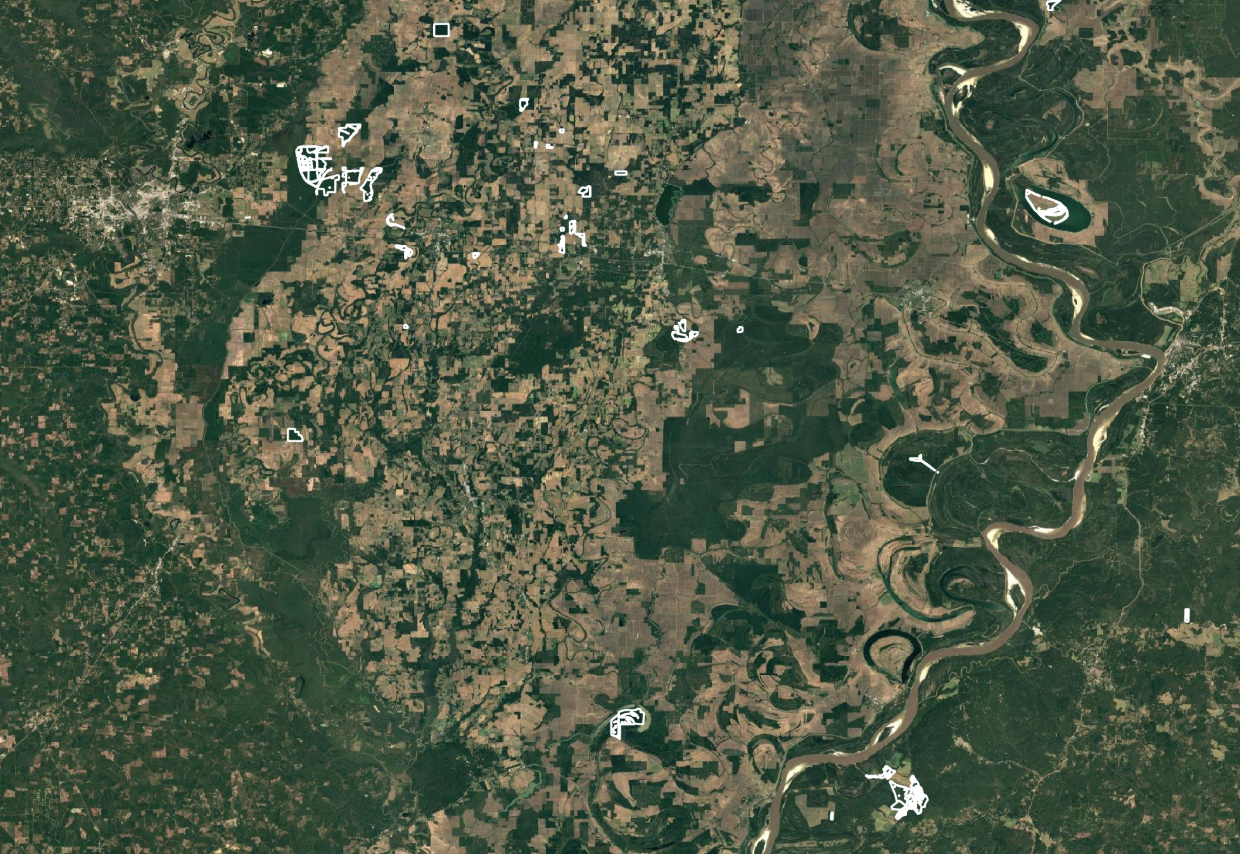
The project parcels (shown in white) are in an area that has been very heavily logged. Geospatial analysis has revealed that similar parcels that were approved for timber harvest logged 81% of their trees on average. This evidence supports the projectโ€™s additionality claim that enrolled parcels were at high-risk of being heavily deforested in the absence of a carbon project.

Beyond Carbon

Community and biodiversity co-benefits

This project delivers substantial community, economic, and environmental benefits. 

Community: The project provides significant social impact by operating in communities with persistent poverty and social justice concerns, with 84% of enrolled acres located in underserved areas that face heightened exposure to climate impacts. Local communities benefit from improved recreational opportunities through enhanced biodiversity and wildlife habitats, while the project reduces flood risks by providing natural flood barriers that enhance safety for downstream communities. The forests also contribute to improved mental and physical health benefits for residents through better air and water quality, while creating new economic opportunities in rural areas that have historically relied solely on timber harvesting for revenue.

Economy: The project creates a wholly new revenue stream for rural landowners through carbon credit sales, enabling them to generate income from forest conservation rather than clear-cutting timber. This economic model allows small family forest owners to pay property taxes, cover family expenses, and fund improvements without resorting to aggressive harvesting practices. The project generates increased tax revenues and job opportunities in the covered geographies while supporting local economies. For landowners like those in the Morehouse Parish School Board, the program provides financial stability that allows them to maintain their forested lands for long-term conservation rather than selling for development or harvesting for immediate income.

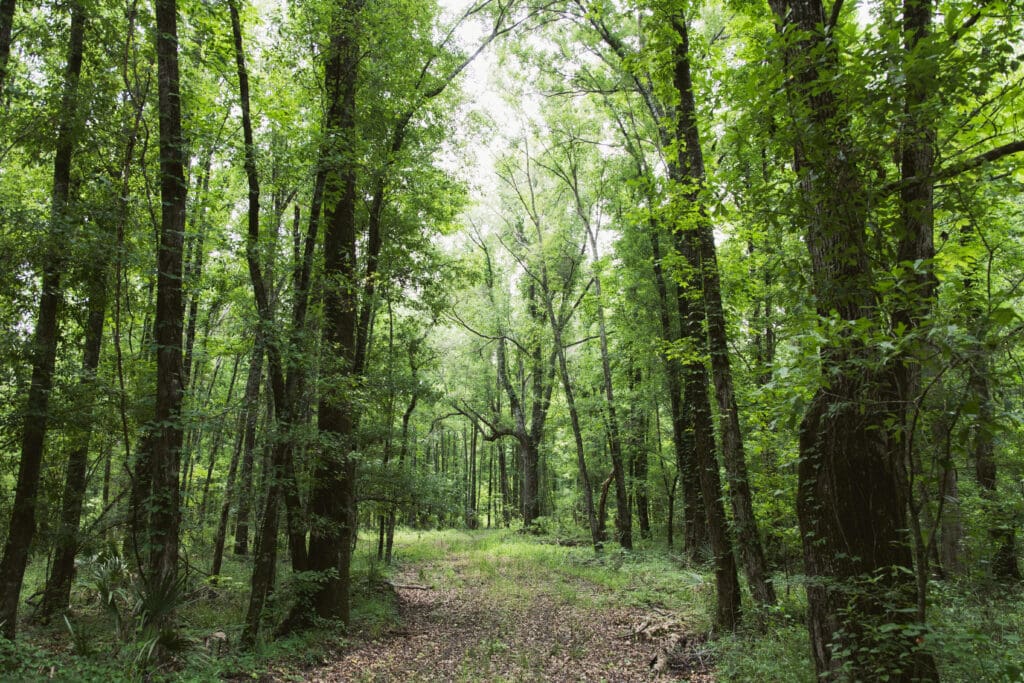
Environment: The project delivers substantial environmental improvements through the conservation of 19,500 acres of bottomland forests in the Mississippi Delta. These forests act as natural water filters, processing organic wastes and reducing sediment runoff while protecting over 1,027 acres of streamside management zones across 88 miles of waterways. The project enhances biodiversity by providing critical habitat for threatened species including the Rabbitsfoot Mussel, Yellowcheek Darter, and Ouachita Fanshell, while supporting wildlife corridors along the Mississippi Flyway for migratory birds. Additionally, the forests improve air quality by absorbing harmful pollutants and particulate matter, while stabilizing soils with tree root systems to prevent erosion and improve soil fertility.

Risk of Reversal

Nature-based projects like this one face some risk of reversal. Carbon storage may be affected by natural hazards such as wildfires, flooding, and escalating climate change impacts. Additionally, human-driven factors such as changes in land use or local governance structures can also impact carbon storage.

Registry & Verification

Registry ACR
Project ID 848
Verification Body TUV SUD

Notable Buyers

Organizations that have purchased credits from this project

In the News

NativState Releases First 400,000 Carbon Credits From Louisiana Forest Project

Carbon Herald ยท Jan 17, 2025

CNaught’s take: NativState has successfully gone through its first verification for this project, validating the climate claims that the project is making. The article also mentions that NativState has 15 more projects going through validation now which suggests that this developer is building a scalable and replicable business model which gives us more confidence in the permanence of this project. Typically, new project developers can be risky to work with as there is more risk that they will close up shop. This article supports our belief that this project will successfully operate through all 40 years of its crediting period and ensure that local community members are able to receive financial compensation for conserving their forests.

Green Star Royalties Invests $5.6M In NativeState LLC for Carbon Offset Portfolio

CarbonCredits.com ยท May 1, 2024

CNaught’s take: This $5.6 million investment from Green Star Royalties provides significant financial backing that enhances confidence in NativState's long-term viability and ability to scale their operations sustainably. The investment validates NativState's business model from an external financial perspective, as sophisticated investors like Green Star have conducted due diligence and see sufficient potential to commit substantial capital. This funding injection reduces the financial risk typically associated with project developers, providing NativState with the resources needed to support their growing portfolio of 15+ projects through the multi-decade commitment periods required for forest carbon projects.

Birdsu2019 super-highways: Migration flyways

Chinook Observer ยท Apr 9, 2025

CNaught’s take: Flyways are major migration routes used by birds and are critically important for maintaining bird populations. This project overlaps with the Mississippi Flyway, one of North America's most important migration corridors. Many bird species that rely on this flyway have experienced population decline due to habitat loss in this region. By preserving 19,500 acres of bottomland forests and wetlands, the project creates essential stopover and breeding habitat for millions of migratory birds. This habitat protection has cascading ecological benefits beyond bird conservation, as healthy bird populations provide crucial insect control and pollination services that stabilize broader ecosystem functions.

The U.S. Forest Service is cutting down more trees, despite their ability to hold carbon

Louisiana Illuminator ยท Mar 7, 2025

CNaught’s take: The US Forest Service is increasing harvests in the projectu2019s region. The mature hardwood forests of this region are a particularly valuable carbon sink as a single tree in this region can store up to 12.7 tonnes of CO2. Given this regional trend towards increased logging, the forests within this project are at a further heightened risk of harvest. The projectu2019s 40 year conservation commitment therefore provides even more critical climate value by protecting valuable carbon sinks.

UN Sustainable Development Goals

This project contributes to the following UN Sustainable Development Goals

UN Sustainable Development Goal 9: Industry, Innovation and Infrastructure

Goal 9: Industry, Innovation and Infrastructure

Build resilient infrastructure, promote inclusive and sustainable industrialization and foster innovation.

Learn more about UN SDG 9
UN Sustainable Development Goal 15: Life on Land

Goal 15: Life on Land

Protect, restore and promote sustainable use of terrestrial ecosystems, sustainably manage forests, combat desertification, and halt and reverse land degradation and halt biodiversity loss.

Learn more about UN SDG 15

Project Location

Louisiana, United States

Coordinates: 30.52000, -91.52000

View on Google Maps

Project data sourced from CNaught carbon marketplace. Information may be updated periodically.