CNaught maintains a very high quality standard for all projects in the portfolios we manage. To ensure that a project meets this standard, we perform due diligence that’s backed up by third-party ratings agencies’ independent due diligence.
Additionality:
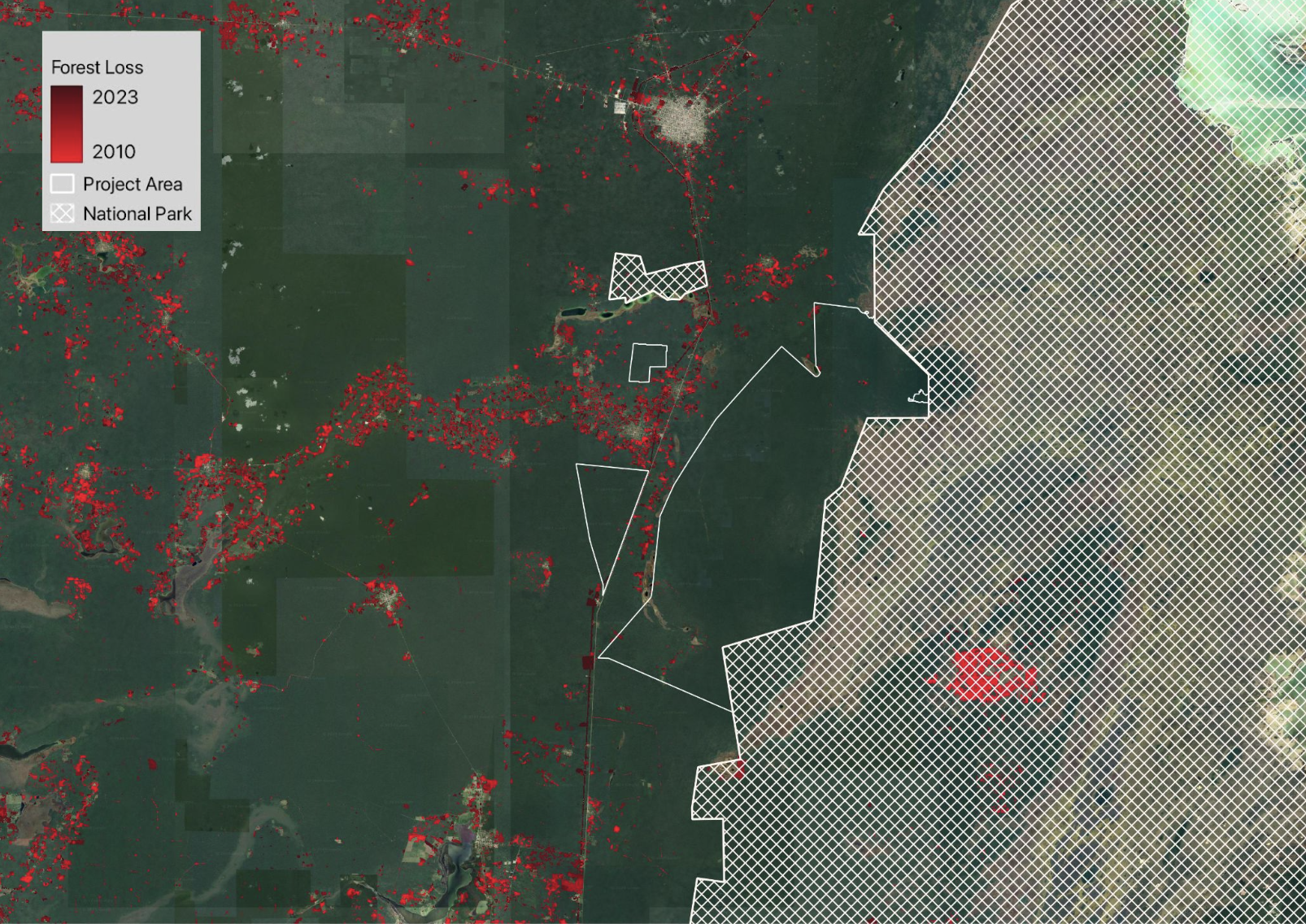
This project has high additionality. The project area faces significant deforestation pressure from rapidly expanding agriculture and infrastructure development, particularly from the new Maya Train project, which has already led to forest loss in the region. Additionally, the area has a history of commercial timber harvesting that was temporarily paused in 2017 due to government restrictions. This project has helped prevent the intensive logging from resuming by providing an alternative economic model that prioritizes forest conservation while still delivering community benefits.
Over-Crediting:
This project has a low risk of over-crediting, meaning that it is likely to have accurately accounted for the amount of carbon being removed from the atmosphere. We found that the project took a conservative approach to credit issuance, as Renoster attests to in its rating. The project only receives credits for forest growth above the initial carbon stock and doesn’t claim credits for avoided deforestation, even though analysis suggests that approximately 6.5% of forest carbon would likely have been lost without the project. The project’s conservative carbon accounting is further supported by its comprehensive inventory system and detailed plot measurements.
Durability:
This project activity is highly durable as we are confident in its ability to provide permanent emissions removals. The project is legally secured through a 100-year commitment signed by the local community and backed by Mexico’s robust community forest ownership laws. Its location in a tropical rainforest ecosystem provides natural resilience to disturbances, with the area showing remarkable stability over the past 40 years despite regional challenges like hurricanes and fires. The project’s conservative approach to exclusion zones around infrastructure development, like the Maya Train line, further demonstrates its ability to maintain carbon stocks even in the face of external pressures.
Double-Counting:
The project credits have a very low risk of being double counted. There are no regulatory obligations being met by the project activity and the project’s registry, the Climate Action Reserve, has mechanisms in place to ensure that the project is not registered in any other programs. We also confirmed that the project does not overlap with any other forest carbon projects to ensure that its credits are not claimed by other projects.