
Goal 13: Climate Action
Take urgent action to combat climate change and its impacts.
Learn more about UN SDG 13
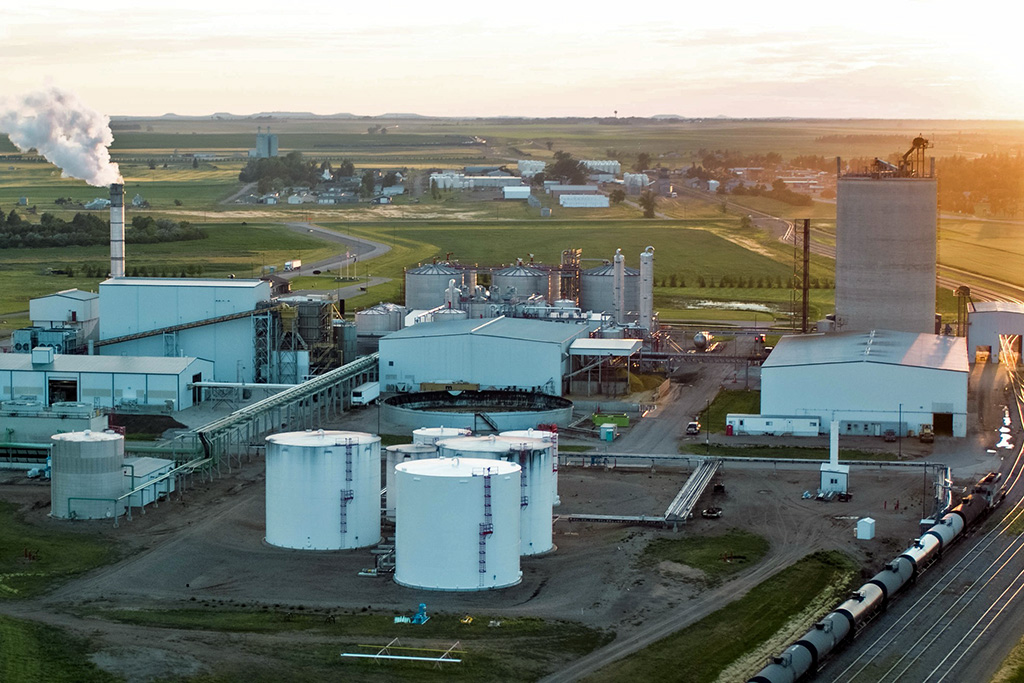
The Gevo Carbon Capture project permanently sequesters carbon dioxide generated during ethanol production at a 50-million-gallon-per-year corn ethanol plant near Richardton, North Dakota. CO2 produced during fermentation is captured, purified to greater than 99.9% purity, compressed, dehydrated, and subcooled into liquid form before being injected underground into the Broom Creek geological formation on-site. In the project’s absence, this CO2 would be released directly into the atmosphere as a byproduct of fermentation. The project is situated on an approximately 25-acre plant campus within a 135-acre parcel acquired by Red Trail Energy LLC in 2004 and 2005, with the facility having operated since January 2007. This carbon capture and storage project converts an existing emissions source into a vehicle for permanent geological sequestration, locking biogenic CO2 underground in a stable deep rock formation and preventing its contribution to atmospheric greenhouse gas concentrations.
CNaught maintains a very high quality standard for all projects in the portfolios we manage. To ensure that a project meets this standard, we perform due diligence that’s backed up by third-party ratings agencies’ independent due diligence.
Additionality:
This project has high additionality, meaning it is very unlikely that this project activity could have occurred in the absence of carbon funding. The integration of carbon capture and storage into ethanol production remains a nascent technology, with only three corn ethanol plants in the USA currently operating with CCS, confirming that this approach is far from common practice. Our financial analysis found that the project’s internal rate of return is below 0% over the 12-year period in which the 45Q investment tax credit can be claimed, with levelised costs of ethanol CCS estimated at USD 55-65 per tCO₂e against a maximum 45Q credit value of USD 50 per tCO₂e — meaning the tax credit alone is insufficient to justify the investment. Carbon finance is estimated to represent 67-80% of the project’s total revenue, making it the primary driver of the project’s financial viability and a critical factor in the decision to implement the carbon capture activity.
Over-Crediting:
This project has a low risk of over-crediting. The project accurately applies a cut-off approach to its lifecycle analysis, which is appropriate and defensible given that the CCS facility was retrofitted onto an existing ethanol plant that has been operational since 2007, meaning emissions from the broader ethanol production process can reasonably be considered outside the project boundary. The carbon capture process itself produces a highly pure CO₂ stream of greater than 99.9% purity, with only trace quantities of nitrogen and oxygen, meaning there is minimal ambiguity in the volume and composition of the gas being sequestered. Gross carbon removal is measured directly at the final injection wellhead, accounting for any CO₂ lost during pipeline transportation and eliminating over-crediting risk at the measurement stage. The injected CO₂ is permanently stored in the Broom Creek geological formation, a stable deep rock formation with well-understood containment properties, providing strong assurance that sequestered carbon will not be released back into the atmosphere and that credited removals reflect genuine, durable outcomes.
Durability:
This project activity is highly durable, with CO₂ sequestered in the Broom Creek geological formation considered permanent for at least 1,000 years, and potentially millions of years. The storage site sits approximately 2 kilometres below the surface in 95-metre thick sandstone, sealed by a 335-metre thick shale cap rock and an additional 900-metre thick sealant layer above, providing multiple layers of geological containment. Research suggests that over 99% of injected CO₂ remains stored after 1,000 years, and a comprehensive risk assessment found no subsurface leakage pathways requiring corrective action. Ongoing durability is further supported by stringent Class VI monitoring requirements mandated by the EPA’s Underground Injection Control program, including a mandatory 50-year post-injection site care period, ensuring the long-term integrity of stored carbon is continuously verified.
Double-Counting:
This project has a very low risk of double-counting. Despite participating in both the voluntary carbon market and several compliance markets, including regional Low Carbon Fuel Standard schemes, the developer retires an equivalent number of voluntary credits for any volumes of ethanol directed to compliance markets, ensuring that the same tonne of sequestered CO₂ is never credited twice. Volumes of ethanol supplied to different markets are tracked and verified through independent audit processes, providing strong assurance that credits are not stacked across programs. The project is registered on the Puro registry, which has mechanisms in place to prevent duplicate issuance or registration across other programs.
A figure developed by the project developer to illustrate how their carbon capture and sequestration process works.
Community and biodiversity co-benefits
This project provides sustainable development benefits. By demonstrating that carbon capture and permanent geological sequestration can be successfully integrated into an existing ethanol production facility, the Red Trail Energy project serves as a valuable proof-of-concept for decarbonizing the broader agricultural processing sector. Ethanol plants represent a particularly promising candidate for carbon capture given that fermentation produces a relatively pure stream of CO2, making the capture process more straightforward and cost-effective than in many other industrial settings. Projects like this one help build the technical expertise, regulatory frameworks, and economic models needed to scale this approach across the hundreds of ethanol facilities operating across the United States, potentially unlocking significant emissions reductions from an industry that has until now lacked viable pathways to deep decarbonization.
These projects face low risk of reversal because they are designed to store captured carbon for hundreds or even thousands of years. The primary risk of reversal comes from failure of the storage mechanism over the promised timeframe.
Organizations that have purchased credits from this project


This project contributes to the following UN Sustainable Development Goals
Take urgent action to combat climate change and its impacts.
Learn more about UN SDG 13Project data sourced from CNaught carbon marketplace. Information may be updated periodically.
Create a free account in 30 seconds. Use CarbonGuru everywhere — in your browser, inbox, apps, and AI agents — and see your impact immediately.